SIMON MCKENZIE ARCHITECTURE

SOLAR FLARE
Work by Dalia Alkhatib - Arch 620 Digital Design Morphology
Arch 620: Digital Design Morphology is a Graduate-level architecture course that explores how natural phenomena can inspire new ways of thinking about space, form, and material. Using tools like advanced digital modeling, AI, animation, and physical prototyping, students develop architectural designs that are dynamic—designs that move, change, and tell stories over time, both visually and conceptually.




At the heart of the course is the idea of material imagination—a term borrowed from the phenomenologist Gaston Bachelard—used here to describe the way architectural form can be inspired and shaped by primal elements such as fire, water, air, and earth. The course begins with the close observation of a short video clip (8–10 seconds) capturing an elemental force—such as a solar flare erupting from the sun, a wave crashing onto shore, an avalanche in motion, or a lightning strike. This fragment of reality becomes the conceptual and formal seed for an entire architectural journey.


Drawing from Bachelard’s works such as The Psychoanalysis of Fire and The Poetics of Space, students explore the symbolic, psychological, and formal properties of the chosen force. These texts serve as both philosophical frameworks and creative provocations, encouraging students to interpret the movement, intensity, rhythm, and affect of natural elements through an architectural lens. Design investigations move fluidly between poetic theory and AI experimentation.

Final Animation - Solar Flare


Students are encouraged to push the boundaries of form and time, using motion as a medium of design rather than a byproduct. Johann Von Goethe once said 'Architecture is frozen music'. By this standard, the architecture is not static—it pulses, expands, contracts, flows. Final outcomes culminate in a short animated film that conveys the evolution and performative nature of a speculative architectural pavilion. This pavilion acts as both a spatial artifact and a stage—sometimes literal, sometimes symbolic—for storytelling, performance, and reflection.

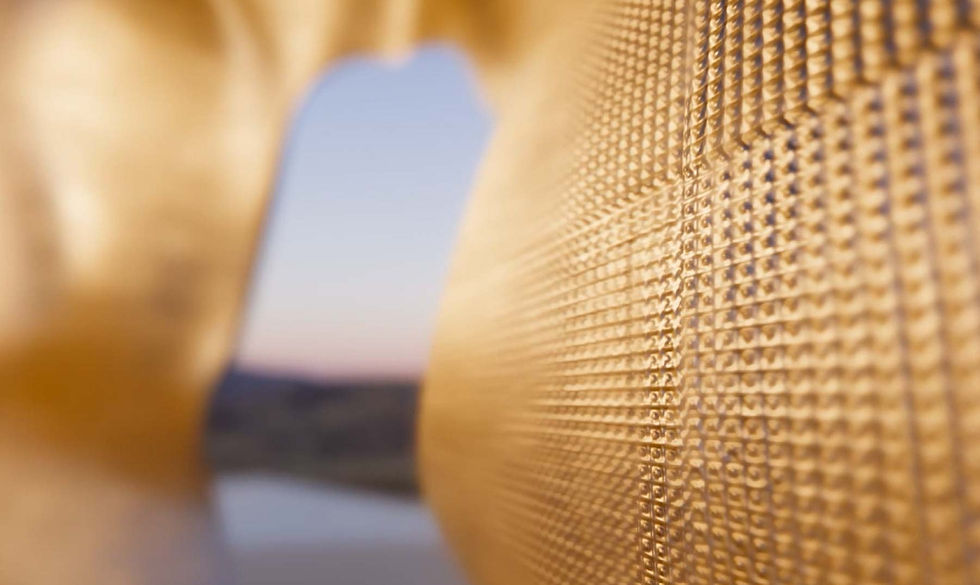
Dalia Alkhatib’s project used a video of a solar flare as her point of departure. Through layered readings of Bachelard’s The Psychoanalysis of Fire, she unpacked the metaphorical and emotive dimensions of ignition, transformation, and intensity. The resulting design was a desert pavilion whose shifting, filament-like structure captured the essence of solar energy—both wild and contained. In the final animation, the pavilion becomes a material landscape for a solitary dancer, blurring the line between architecture and body, movement and matter. The pavilion appears to "dance" alongside the human figure, not as a backdrop, but as an active participant in the choreography of fire.
Students are encouraged to push the boundaries of form and time, using motion as a medium of design rather than a byproduct. Johann Von Goethe once said 'Architecture is frozen music'. By this standard, the architecture is not static—it pulses, expands, contracts, flows. Final outcomes culminate in a short animated film that conveys the evolution and performative nature of a speculative architectural pavilion. This pavilion acts as both a spatial artifact and a stage—sometimes literal, sometimes symbolic—for storytelling, performance, and reflection.